Literature

Twelve essays exploring the economics, philosophy, and technology of sound money.

Evolution of Money icon

Evolution of Money

Trace the lineage of money from Rai stones and cowrie shells to gold, fiat, and Bitcoin. Understanding what came before is the foundation of understanding what comes next.

Game Theory icon

Game Theory

How rational actors in adversarial environments inevitably converge on the hardest money available — and why Bitcoin's incentive structure is unbreakable.

Gresham's Law icon

Gresham's Law

Bad money drives out good — when legal tender laws force acceptance of debased currency, people hoard the superior money. Bitcoin inverts this dynamic.

Low Time Preference icon

Low Time Preference

The civilizational importance of delayed gratification. Sound money rewards patience; fiat money punishes it. This text reframes your relationship with time.

Innovations: Zero to One icon

Innovations: Zero to One

Bitcoin as a true zero-to-one innovation — not an incremental improvement but a category creation. How sound money fuels the greatest breakthroughs in human history.

Value icon

Value

Energy, nodes, mining, and scarcity — a deep examination of what makes Bitcoin valuable as sound money and how it embodies the purest form of stored human energy.

Liminal State of Fiat icon

Liminal State of Fiat

Fiat currency traps us in a state of transition — neither here nor there. This text maps the existential disorientation of living within an abstract monetary paradigm.

Cognitive Dissonance icon

Cognitive Dissonance

Why intelligent people reject Bitcoin — the psychological barriers to accepting a paradigm shift, and the internal enemy that keeps us trapped in the fiat system.

Monetary Abuse icon

Monetary Abuse

The striking parallels between centralized banking and narcissistic abuse — control through scarcity, gaslighting through inflation, and the erosion of individual autonomy.

Human Nature icon

Human Nature

Bitcoin doesn't aim to change human nature — it designs for it. Aligning incentives toward fairness and sustainability without requiring anyone to become less human.

Intuition icon

Intuition

The problem is deeply intuitive once you grasp it — and if you don't, it's because you haven't tried. Building a first-principles understanding of money and freedom.

Conclusion icon

Conclusion

The synthesis of all preceding texts — bringing together economics, philosophy, and technology into a unified understanding of Bitcoin's transformative potential.

Further Reading

Saifedean Ammous
Excerpt from 'The Bitcoin Standard' icon

Excerpt from 'The Bitcoin Standard'

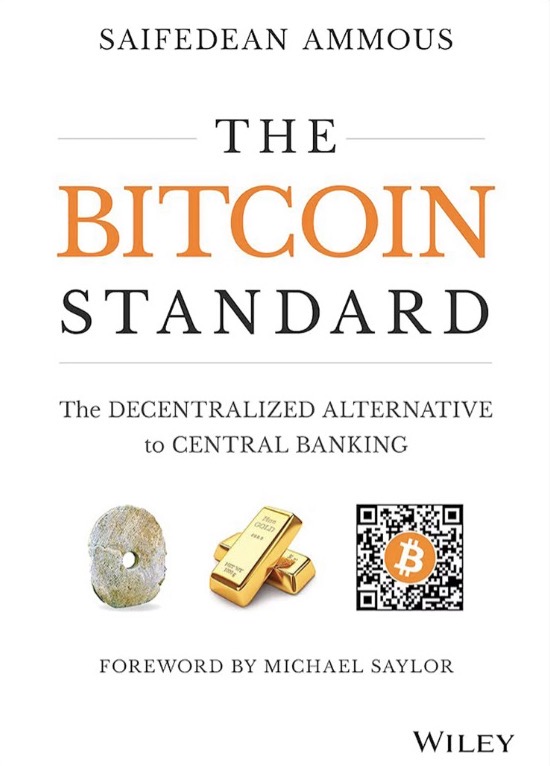
Pages 96–104 from Saifedean Ammous's landmark work — exploring how sound money fuelled the zero-to-one innovations of the nineteenth century and the artistic flourishing that came with it.

Articles by Saifedean icon

Articles by Saifedean

Further Reading

Parker A. Lewis

Parker A. Lewis
Gradually, Then Suddenly icon

Gradually, Then Suddenly

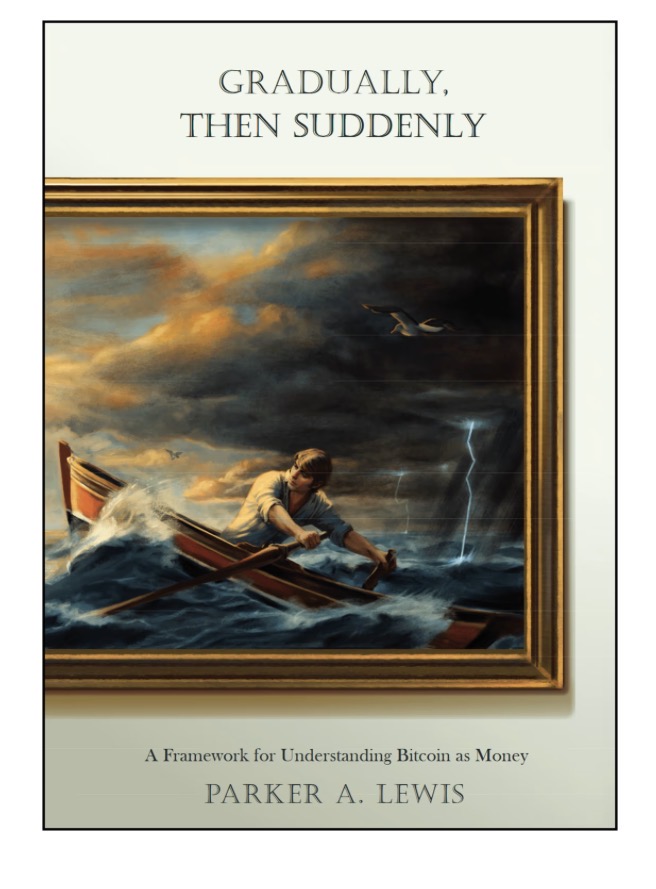
Parker A. Lewis's 'Gradually, Then Suddenly' is a systematic, chapter-by-chapter framework for understanding Bitcoin as money — why it's different, why it can't be copied, and why it's the only viable alternative to a broken fiat system.

02

Gradually, Then Summary

A comprehensive summary of 'Gradually, Then Suddenly' — the key arguments and takeaways distilled into an accessible read.

Bitcoin is Money (&) Currency icon

Bitcoin is Money (&) Currency

Parker Lewis makes the case that bitcoin isn't just money — it is the first money in history to also function as a currency without an issuer. No central bank, no standard weights and measures, no intermediary. Bitcoin does it all natively.

Bitcoin is the Greatest Asymmetry icon

Bitcoin is the Greatest Asymmetry

A presentation Parker A. Lewis gave at Old Parkland in Dallas on December 10th — Bitcoin is the Greatest Asymmetry. It builds on the conclusion of his book, Gradually, Then Suddenly, exploring why bitcoin is the greatest asymmetry in the world today and what a bitcoin standard will look like.

Further Reading

Allen Farrington

Number Go Down icon

Number Go Down

Allen Farrington and Sacha Meyers dismantle the fiat economist's fear of deflation — distinguishing good deflation (the dividend of entrepreneurial progress) from bad deflation (the penance of credit unwinds) — and argue that in a society with honest money, the number should go down.

Further Reading

Phil Geiger

unchained.com
21 Million is Non-Negotiable icon

21 Million is Non-Negotiable

An essay from Unchained on why Bitcoin's fixed supply of 21 million is the one line that cannot be moved — the engineering, incentive, and consensus reasons no one can credibly change the cap, and why that certainty is the foundation of Bitcoin's value.